Tree and site assessment
The crew checks the tree's species, size, condition, lean and likely load points, then identifies nearby structures, services, traffic and suitable drop zones.
Serving Logan City, Queensland & surrounding areas
Safe, controlled removal of hazardous, damaged or unwanted trees, with a clear work plan based on access, tree condition and nearby property.
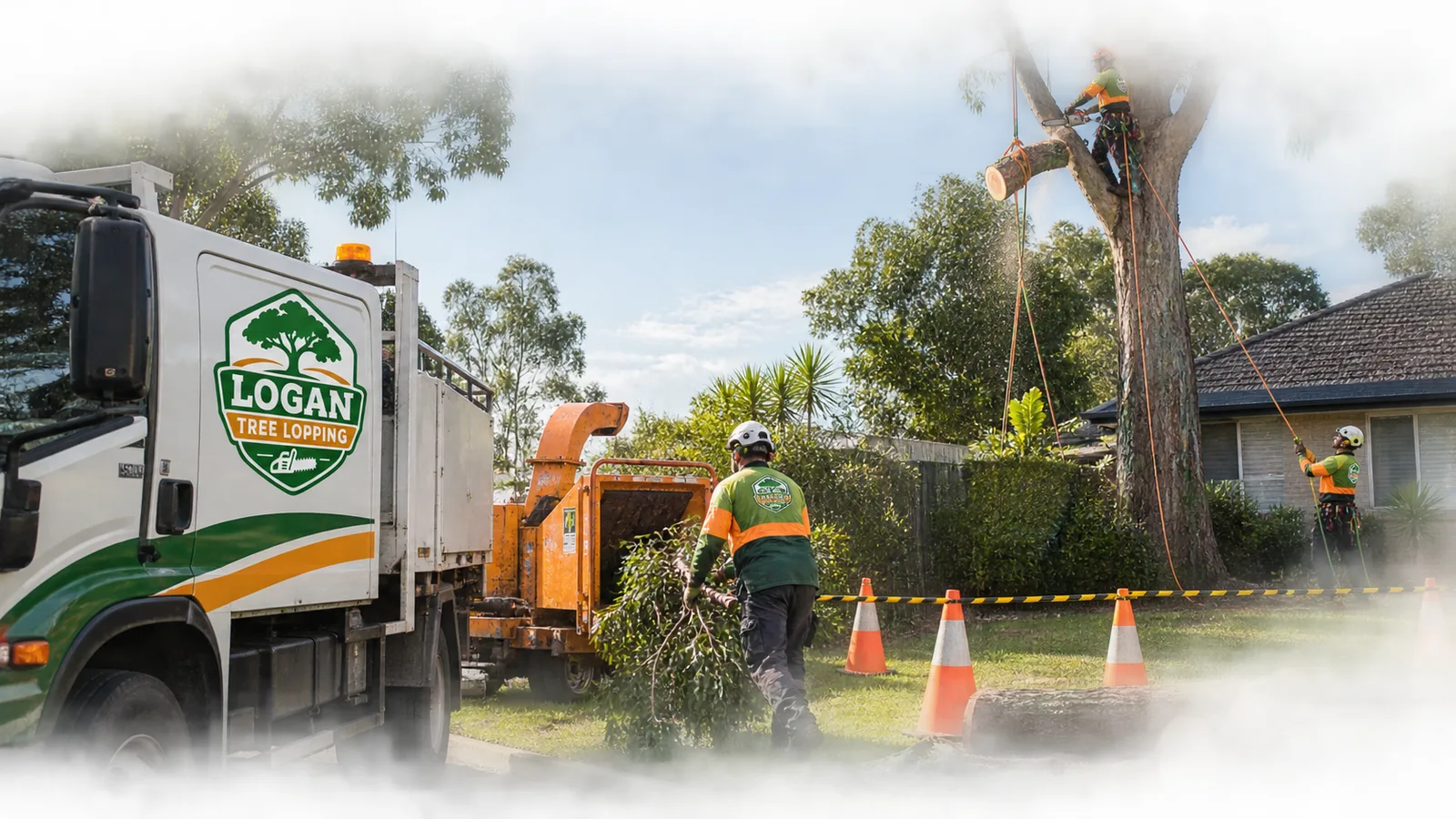
Professional tree removal in Logan starts with more than a quick look at the trunk. The tree's condition, lean, canopy spread and available drop zone all affect the method. Nearby roofs, fences, pools, sheds, roads and overhead services also need to be considered before cutting begins.
Logan Tree Lopping assesses these factors and sets out a practical removal plan. For residential blocks, acreage properties and commercial sites, Logan City's local tree lopping service focuses on controlled work. The aim is to remove the tree without exposing people or surrounding property to avoidable risk.
Logan City includes established suburban blocks in Beenleigh and Woodridge, newer residential development around Yarrabilba, larger acreage properties near Greenbank, and sloping residential areas in Cornubia. Those settings create different access and rigging requirements. A tree beside a compact suburban driveway may need to be dismantled in small pieces, while a tree on open acreage may offer a usable drop zone. The method should match the site.
Removal may be appropriate when a tree is dead, structurally unstable, badly storm-damaged or in conflict with a building project. Warning signs include major deadwood, a newly developed lean, splitting at a main union, root plate movement, trunk cavities and broken hanging limbs. Fungal fruiting bodies near the base can also justify closer assessment, although their presence alone does not prove that removal is required.
Some trees can be retained through pruning or ongoing monitoring. Others have defects that cannot be reduced to an acceptable level. The decision should consider the likely failure point, what the tree could strike and whether practical risk-reduction work is available.
South East Queensland storms can expose weak unions and root problems quickly. After severe weather, keep people away from suspended limbs, fallen conductors and trees resting on structures. Energex advises treating fallen or damaged powerlines as live. Work near electrical infrastructure requires the correct clearances and coordination, so do not attempt to cut or move affected branches yourself.
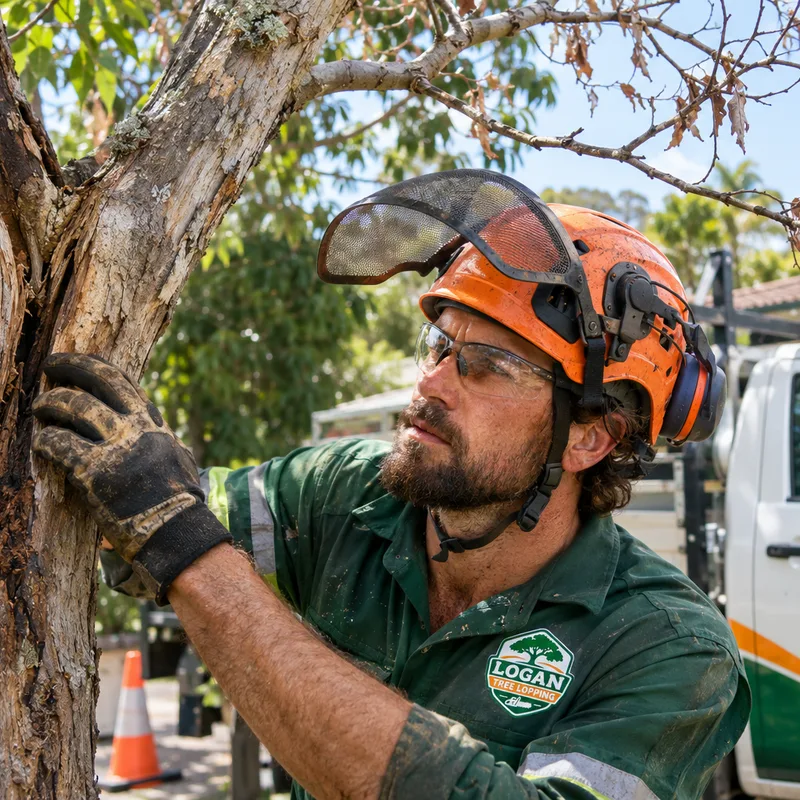
The crew checks the tree's species, size, condition, lean and likely load points, then identifies nearby structures, services, traffic and suitable drop zones.
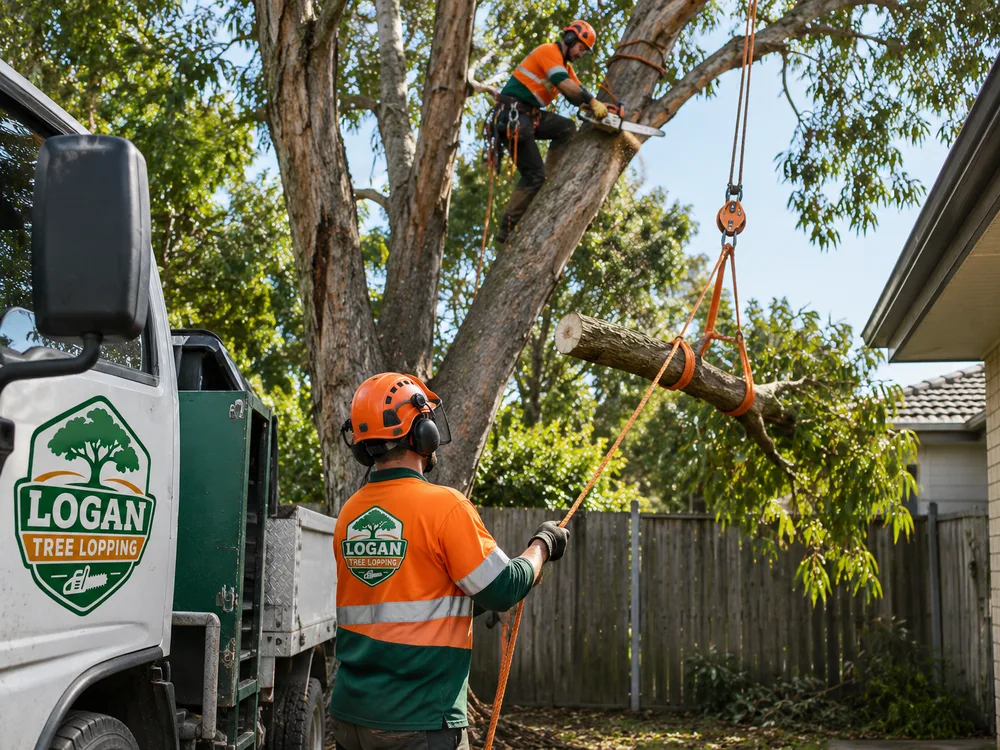
Where space is limited, a climber or elevated work platform can be used to remove the crown and trunk in manageable sections. Rigging ropes and friction devices may be needed to lower pieces rather than let them fall.
A defined exclusion zone helps keep occupants and visitors clear. The work method can also account for paving, gardens, fences and other surfaces that may be damaged by uncontrolled debris.
Branches and timber are processed according to the agreed scope. Clarify whether removal, chipping, log cutting and final clean-up are included before work starts.
A defined sequence keeps the condition, access, work method and final site outcome clear before removal begins.
Tell us where the tree is, what concerns you and whether access is restricted. Photos can help with early planning, but they may not reveal root movement, decay or the full relationship to nearby structures.
We assess the tree and work area, then define the removal method, equipment needs, debris handling and any access arrangements. The written scope should make clear what will remain when the crew finishes.
Before removal, the property owner should check whether Logan City Council approval or another exemption applies. Protected vegetation, overlays and other planning controls can affect what work is permitted.
The crew establishes an exclusion zone, positions equipment and confirms escape routes, communication and lowering points. Vehicles, pets and movable property should be kept outside the work area.
The tree is felled or dismantled according to the agreed plan. Branches, logs and loose debris are then handled as specified in the quote, leaving the area ready for any separate stump or landscaping work.
Tree removal in Logan City typically costs about $500 to $3,000, while very large, hazardous or crane-assisted removals can cost more. A small, accessible tree may fall near the lower end; taller trees beside buildings, pools or power infrastructure usually cost more.
Final pricing depends on height, trunk diameter, condition, access, rigging needs, equipment, debris volume and whether the timber stays on the property. Council requirements or traffic control can also affect the scope. The exact cost is confirmed after an on-site inspection.
A reliable quote should describe the entire job, not simply state that the tree will be removed. Look for the number and location of trees, the intended work method, what debris will be taken away, whether logs will be cut to a requested size, and what is excluded. Stump work is commonly treated as a separate item, so confirm whether the stump will remain and at what height.
Access often has as much influence on the work as tree height. Narrow side paths, retaining walls, soft ground and limited equipment space can require more climbing and rigging. On larger Greenbank properties, equipment may have room to operate but gates, ground conditions and distance to the processing area still matter. In dense parts of Beenleigh or Woodridge, crews may need to manage driveways, neighbouring structures and pedestrian movement more closely.
Ask how the work zone will be controlled and whether the proposed method accounts for damaged or decayed wood. A sound limb can carry rigging loads that a compromised limb cannot. Good planning changes the anchor points, piece sizes and lowering method to suit the tree's actual condition.
Get a clear written scope for your tree, access conditions and debris handling before removal work begins.
Call for a Free EstimateApproval depends on the property, the tree and any planning or environmental controls that apply. Logan City Council's vegetation requirements should be checked before work begins, particularly where protected vegetation, mapped overlays or development conditions may be involved. A damaged or dangerous tree does not automatically remove every approval obligation.
Timing depends on the immediate risk, crew availability, access, weather and whether electrical or council coordination is required. A hanging limb over an occupied area may need urgent isolation before full removal can be arranged. After a South East Queensland storm, keep clear of the tree and provide photos and access details when making an enquiry.
Many trees in confined yards can be removed by sectional dismantling rather than being felled in one piece. The crown and trunk are cut into controlled sections, and rigging may be used to lower material away from roofs, fences, pools and sheds. The right method depends on tree condition and whether safe anchor points are available.
Stump removal is usually a separate scope unless it is specifically included in the quote. Tree removal commonly leaves a low stump, while grinding requires separate machinery and suitable access. Confirm the intended stump height, grinding depth, mulch handling and the location of underground services before agreeing to the work.
Move vehicles, outdoor furniture, play equipment and other portable items away from the agreed work zone. Keep children and pets indoors or in another secure area, and arrange access through locked gates. The crew should be told about septic components, irrigation, concealed drains or other underground features that machinery could affect.
Work near overhead powerlines can proceed only when required electrical clearances and safety controls are met. Energex should be contacted about damaged network assets or branches contacting conductors, and fallen lines must be treated as live. The tree crew will need to assess whether utility coordination or specialised arrangements are required before cutting.
Describe the tree, its condition and the surrounding access. Logan Tree Lopping can assess the site and set out a practical removal scope for your property.