Trees and Dense Vegetation
Removal of nominated trees, saplings, shrubs and thick regrowth within the approved work area, using equipment suited to the available access.
Serving Logan City, Queensland & surrounding areas
Safe, practical site preparation for residential blocks, commercial properties and rural land, with the scope planned around access, vegetation and your intended use.
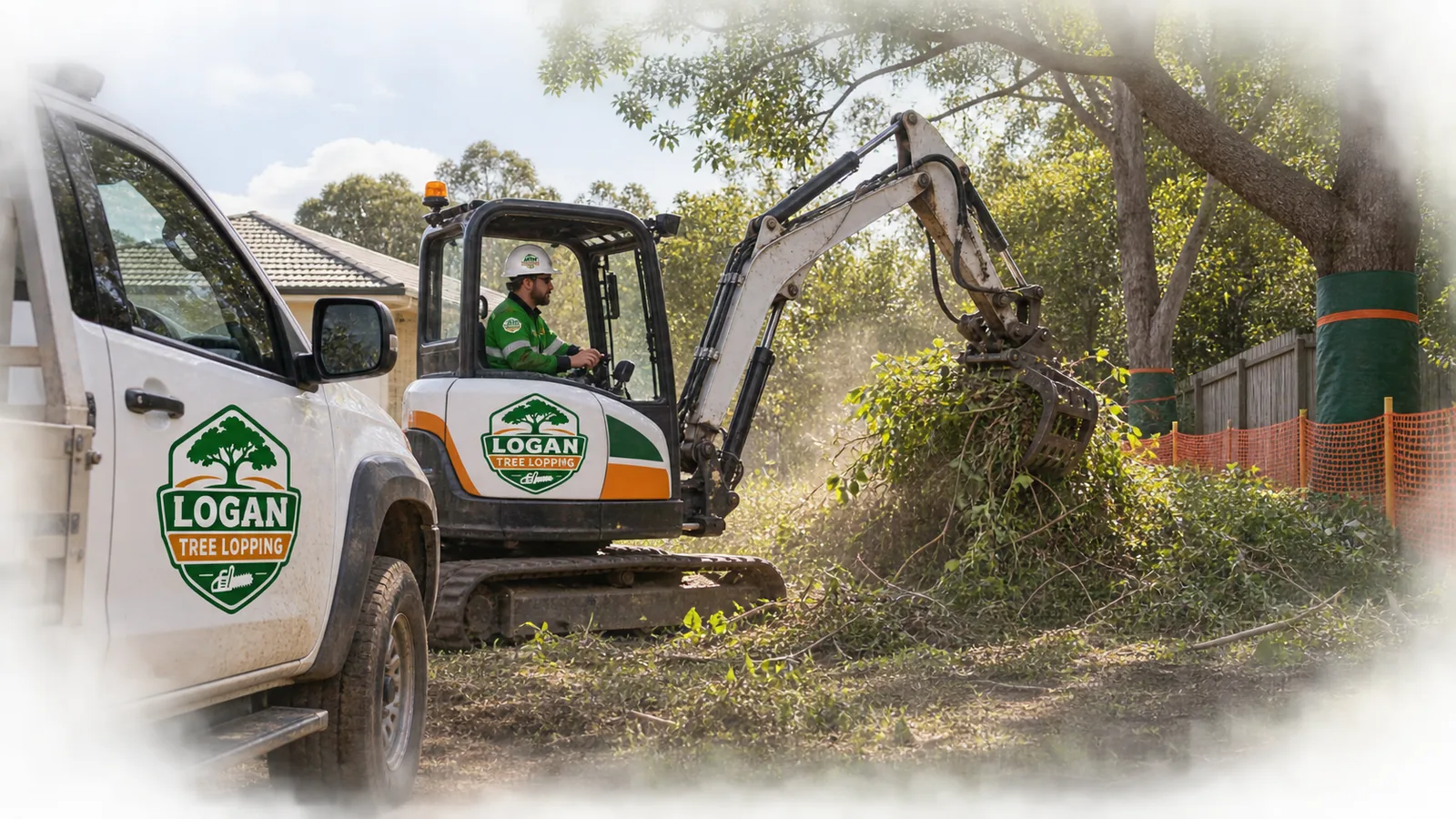
Land clearing Logan projects need more than machinery and an open block. Vegetation type, terrain, access, underground services, nearby structures and the intended use of the land all affect how the work should proceed. Logan Tree Lopping assesses these conditions before work begins, then develops a practical scope for removing unwanted trees, shrubs, weeds, fallen timber and other green material.
We approach every clearing project as Logan City’s trusted tree lopping team, treating it as controlled site preparation rather than indiscriminate removal. The plan identifies what is to be removed, what must remain, where machinery can travel and how material will be processed. This helps protect retained vegetation, fences, driveways, drainage paths and neighbouring property.
Logan City includes established suburban lots, acreage properties and active commercial areas. A tight block in Springwood may call for smaller equipment and careful material handling, while acreage around Greenbank can allow larger machinery but still requires attention to boundaries, drainage and retained habitat. In Beenleigh, nearby buildings and busy access points can shape equipment movements. Properties near the Logan River and its tributaries may also need extra care around waterways, erosion and mapped overlays.
Residential clearing may prepare an overgrown yard for construction, improve usable space or remove vegetation around an existing home. On these sites, access width and proximity to fences, sheds, overhead lines and neighbouring buildings often determine which machines and removal methods are suitable.
Commercial land may require clearing before civil works, new buildings, parking areas or access construction. These jobs benefit from a defined work zone, coordinated machinery movements and a clear arrangement for processing or removing green waste. Rural and acreage work can cover larger areas, including regrowth, woody weeds, fallen timber and vegetation along proposed access routes.
Selective clearing is often the better choice when useful trees, screening vegetation or stable ground cover can remain. Full clearing may suit an approved building footprint or development area, but it should still follow the documented scope and any applicable conditions. Clearing does not automatically include excavation, final grading, compaction or civil drainage unless those items are specifically agreed.
Removal of nominated trees, saplings, shrubs and thick regrowth within the approved work area, using equipment suited to the available access.
Clearing of tangled undergrowth, vines and woody weeds that restrict access or prevent the land from being used as intended.
Collection and processing of branches, logs and loose green material. The agreed method may include chipping, stockpiling or lawful off-site removal.
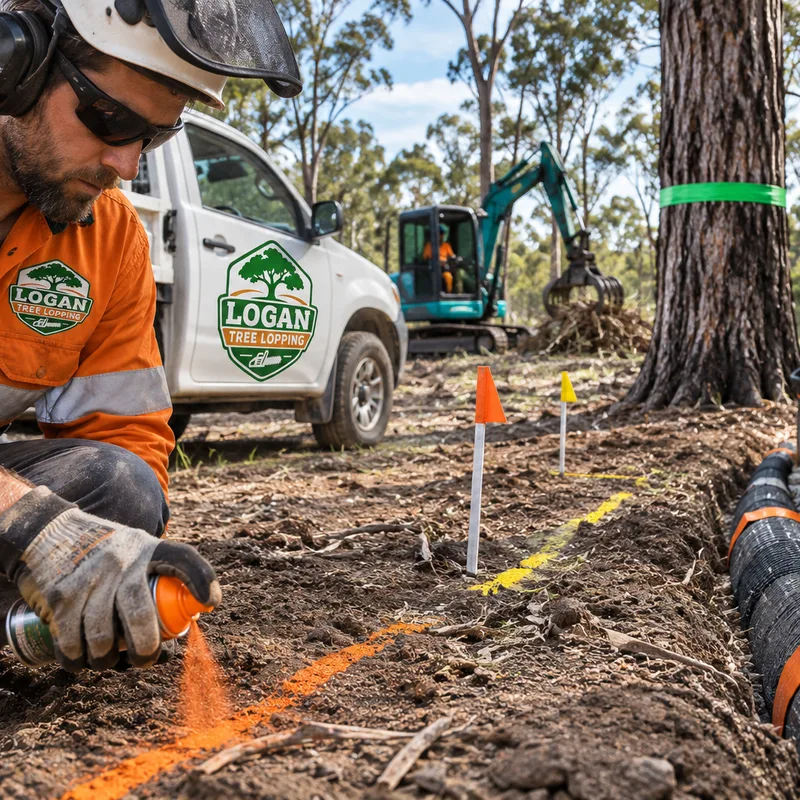
Identification of trees, buffers and ground cover that must remain, with exclusion zones used where practical to reduce accidental damage.
Stumps can be left low, ground or removed where access and the future use of the area permit. Stump removal can cause more ground disturbance than grinding.
Vegetation can be cleared along an approved route for machinery or future works, subject to boundaries, services, drainage and required permissions.
Property ownership does not automatically allow every tree or area of vegetation to be cleared. Logan City Council planning controls, environmental overlays and development approval conditions may restrict removal. State controls can also apply in some circumstances, particularly around regulated vegetation, waterways or protected wildlife habitat. The property owner should confirm the relevant approvals before clearing starts.
Underground services must be considered before machinery disturbs soil or removes stumps. Before You Dig Australia provides plans from participating asset owners, but plans alone may not show every private service or exact on-ground position. Private electrical lines, water pipes, irrigation and septic infrastructure may require separate locating. Overhead powerlines also affect equipment choice and safe working distances.
Boundaries should be identified rather than estimated from a fence line. If the work is close to a legal boundary, a current survey may be needed. Waterways, steep or wet ground and erosion-prone areas can require a different method, staged access or temporary controls to keep loose soil and vegetation out of drainage systems.
A planned sequence keeps permissions, boundaries, access, retained vegetation and material handling clear before machinery enters the work area.
We establish why the land is being cleared, which areas are involved, what vegetation must remain and whether later construction or access work affects the scope.
The assessment considers gates, driveways, slope, soil condition, buildings, fences, visible services, overhead lines and suitable areas for machinery and processed material.
Required approvals, development conditions, service information and boundary identification should be settled before work begins. Exclusion zones and retained trees can then be marked.
Work proceeds in planned stages so machinery has safe access and cut material does not obstruct later tasks. Conditions may require a change in equipment or sequence.
Vegetation is handled according to the agreed scope, and the cleared area is checked against the nominated limits. Any further earthworks remain separate unless included in writing.
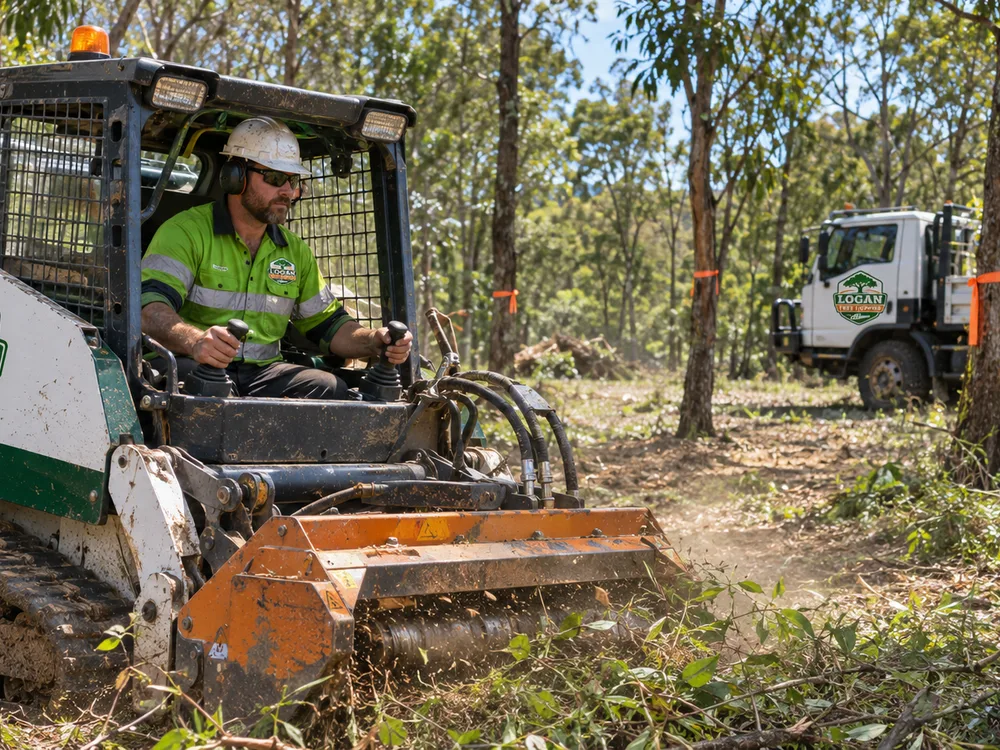
Mechanical clearing with excavators, loaders or specialised attachments can be efficient where there is enough access and room to work. Tight residential lots may require smaller machines, sectional removal and more manual handling. Mulching can process light vegetation and regrowth in place, while heavier logs and stumps may need separate handling.
Ground conditions matter. After sustained rain in South East Queensland, soft ground can reduce traction, increase rutting and make heavy machinery unsuitable until conditions improve. Hot, dry or windy conditions can also change how dust, dry vegetation and ignition risks are managed. The work method should respond to the actual conditions on the day rather than follow a fixed routine.
The destination of cleared material should be agreed in advance. Chipped vegetation may be retained in an approved stockpile, larger timber may be cut into manageable lengths, and unwanted material may be transported to an appropriate facility. Burning vegetation is not treated as a default disposal method because local restrictions, smoke impacts and fire conditions may apply.
Small, accessible clearing jobs in Logan City may typically cost about $1,500 to $5,000, while dense, steep or larger sites can run from $5,000 to $20,000 or more. Acreage and development work is usually priced after inspection rather than by a simple flat rate.
Final cost depends on area, vegetation density, tree and stump size, slope, ground conditions, machinery access, service locations and the amount of material taken off site. Permit-related requirements and erosion controls can also add work. The exact cost is confirmed after a site assessment and written scope.
A site assessment can identify access limits, retained vegetation and material-handling requirements before machinery arrives, giving you a clear scope for the work.
Call for a Free EstimateApproval may be required, depending on the property, vegetation and proposed work. Logan City Council planning controls, mapped overlays and existing development conditions can restrict vegetation removal, while Queensland laws may also apply in some cases. Confirm the rules for the specific lot before clearing begins.
A small accessible area may take a day, while dense vegetation, difficult terrain or a large block can require several days or staged work. The time also depends on stump treatment, material removal and whether wet ground limits machinery access. A site inspection provides a more useful estimate than block size alone.
Yes, selective clearing can preserve nominated trees and vegetation where the work zone allows it. Retained areas should be marked before machinery starts, and root zones may need protection from excavation, stockpiles and repeated machine traffic.
Stump work is included only when it appears in the agreed scope. Options can include cutting stumps low, grinding them beneath the surface or excavating the root mass. Grinding generally causes less ground disturbance, while full removal may suit an approved building footprint or excavation area.
Cleared vegetation can be chipped, cut into manageable timber, stockpiled in an agreed location or transported to an appropriate facility. The suitable option depends on volume, material type, access and the property's future use. Disposal and haulage should be identified clearly in the quote.
Work may need to be postponed when saturated ground cannot safely support machinery. Soft conditions can cause rutting, bogging and sediment movement, particularly near drainage lines or on sloping land. The ground condition is assessed before equipment enters the work area.
Identify the proposed clearing limits, trees to retain, known services, access points and the intended use of the land. Provide any relevant survey, development approval or vegetation information. Before You Dig Australia plans can assist with participating utility assets, but private services may still need separate locating.
Tell Logan Tree Lopping about the property, the area to be cleared and what you intend to do with the land. We can assess the practical constraints and prepare a clear scope for the job.