Deadwood removal
Dead, broken or hanging branches are identified and removed with controlled cuts. The work focuses on defects that may shed onto areas used by people, vehicles or pets.
Serving Logan City, Queensland & surrounding areas
Careful cuts for safer clearances, healthier growth and a tidier property, backed by a practical work plan and dependable local service.
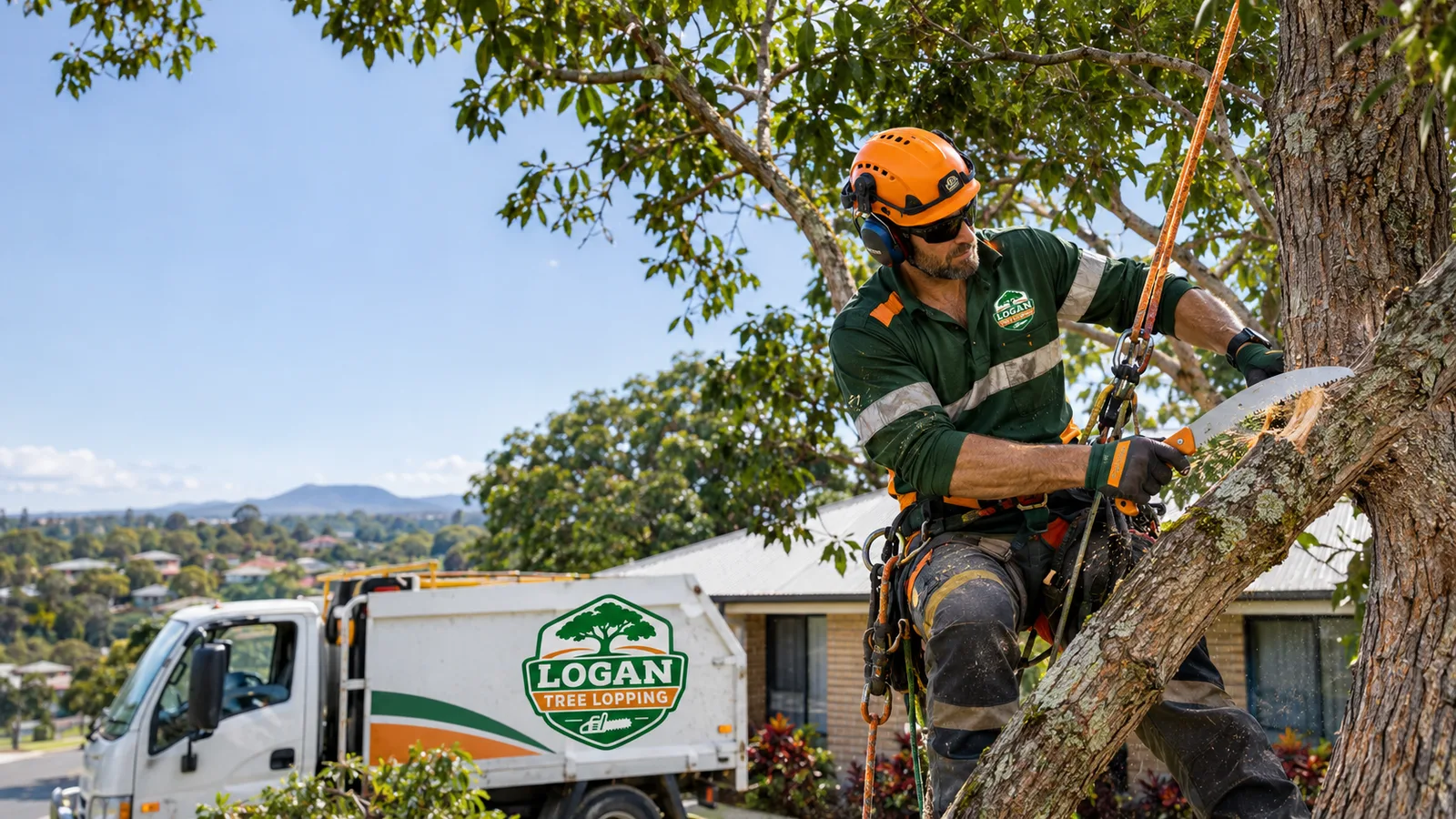
Tree pruning in Logan should solve a clear problem without removing more live growth than necessary. Logan Tree Lopping assesses the species, branch structure, tree condition, nearby buildings and access before recommending a scope. The aim may be to remove deadwood, reduce end weight, improve clearance or manage competing branches while retaining a natural crown.
We are a professional tree lopping company in Logan City that plans pruning around how each tree is growing rather than applying one cutting pattern to every crown. This means selecting suitable branch unions, considering future growth and discussing which limbs can be retained. You receive a practical explanation of the proposed cuts before work starts.
Logan City contains established suburban trees as well as fast-growing vegetation influenced by South East Queensland's warm, humid and storm-prone conditions. Summer growth can quickly reduce clearance around roofs, driveways and fences. Pruning before a branch becomes oversized often allows a more conservative cut and leaves the tree with a better structure than delayed, severe cutting.
Dead, broken or hanging branches are identified and removed with controlled cuts. The work focuses on defects that may shed onto areas used by people, vehicles or pets.
Selected internal branches are removed to reduce congestion while retaining the crown's overall size and shape. Thinning should be selective; stripping out inner growth can leave long, poorly supported limbs.
Long or overextended limbs are shortened to suitable lateral branches. Reduction can lessen end weight and manage crown spread without cutting every limb back to indiscriminate stubs.
Branches can be pruned away from roofs, gutters, paths and driveways. The required clearance is balanced against branch structure and expected regrowth.
Young trees are pruned to address weak forks, crossing branches and competing leaders early. Smaller cuts generally close more readily and can reduce the need for heavier work later.
Selected lower branches may be removed or shortened to improve usable clearance. The amount retained matters because low branches contribute to trunk development and stability in younger trees.
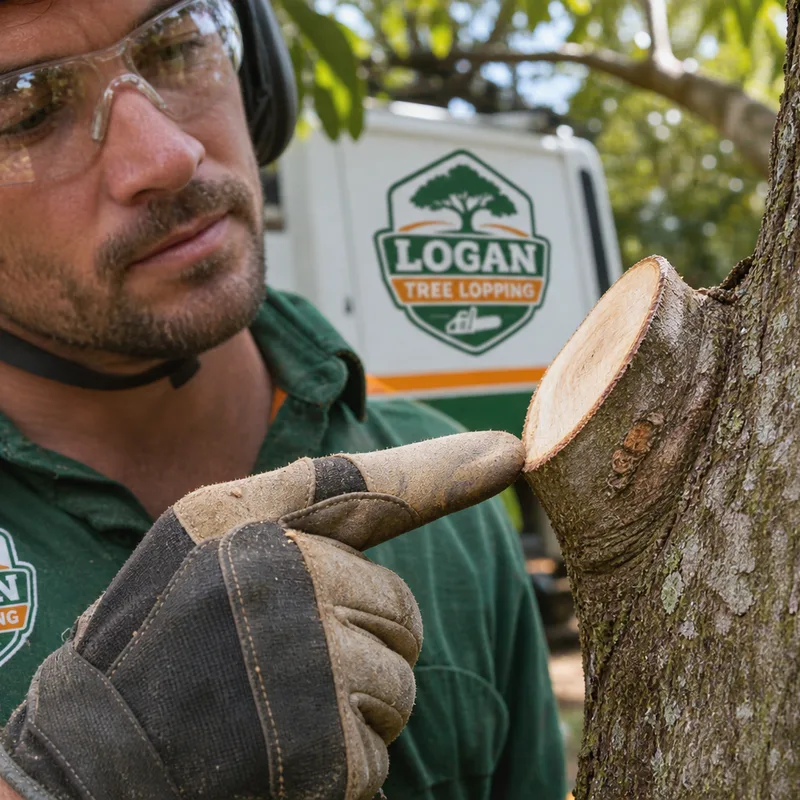
Good pruning starts with branch selection. Cuts are made just outside the branch collar, the swollen area where a branch joins its parent stem. Cutting flush against the trunk damages this tissue, while leaving a long stub delays closure. Heavy limbs may require a staged cut so the branch does not tear bark down the stem.
The pruning method also matters. Crown reduction uses lateral branches capable of taking over growth, while crown thinning removes selected branches throughout the canopy. Topping is different: it cuts branches back to arbitrary points and can trigger dense, weakly attached shoots. A tree may look smaller immediately after topping, but the resulting regrowth often creates another management problem.
Equipment and access are chosen for the tree and work area. Ground crews establish an exclusion zone, and branches may be lowered with ropes when they cannot be allowed to fall freely. Elevated work may use climbing systems or suitable access equipment. Machinery is kept clear of avoidable root-zone compaction where practical, and the work area is cleaned after pruning.
A defined sequence keeps the pruning objective, access, branch control and clean-up clear before overhead work begins.
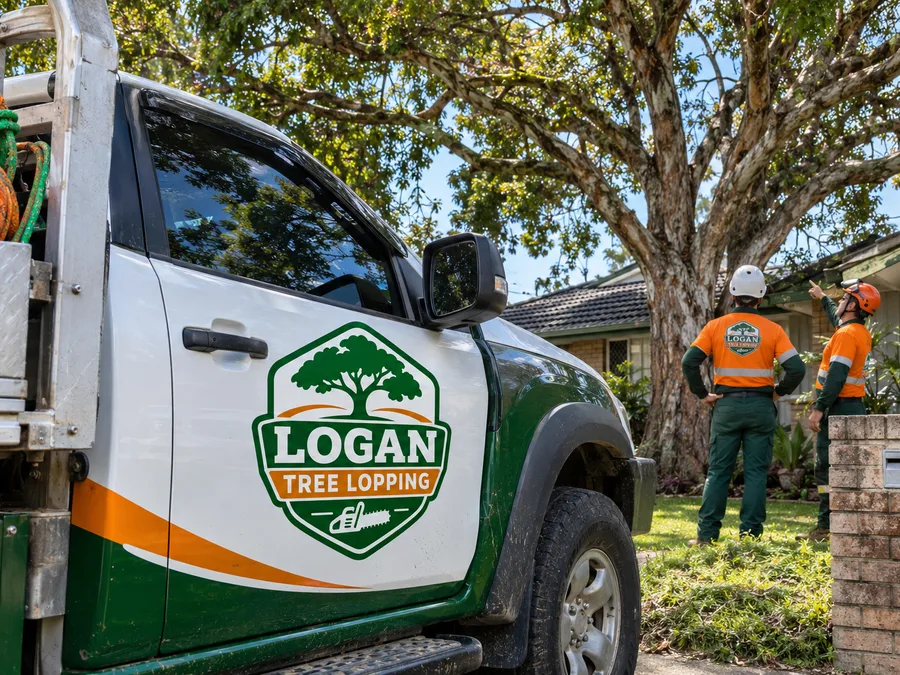
We assess branch unions, deadwood, crown balance, targets beneath the tree and access for workers and equipment. We also note visible signs of decay, cavities, cracks or previous poor cuts.
The scope states what the work is intended to achieve, such as roof clearance, deadwood removal or selective crown reduction. This keeps the job focused and helps avoid unnecessary canopy loss.
The crew sets up an exclusion zone and confirms how cut material will be controlled. Fragile surfaces, fences, gardens and vehicle access are considered before overhead work begins.
Branches are removed or shortened in a planned order. Rigging may be used to lower limbs where space is restricted, and larger branches are cut in stages to limit tearing.
Cut material is gathered and the work area is left tidy according to the agreed scope. The completed crown is checked for balance, clearance and any defects that became visible during the work.
Logan City's subtropical climate supports strong growth, and severe summer weather can expose weak unions, dead branches and overextended limbs. Pruning cannot storm-proof a tree, but removing identified deadwood and reducing selected end weight may address specific defects without stripping the canopy.
Property layout also changes the method. Established residential areas such as Beenleigh and Woodridge can have mature trees close to homes, sheds and boundary fences, so branch control and drop-zone planning matter. In acreage areas around Greenbank and Chambers Flat, larger work zones may be available, although long driveways, soft ground and overhead services can still affect access. Sloping blocks around Cornubia may require extra planning for equipment position and controlled lowering.
Trees near overhead powerlines need special care. Residents should not attempt pruning within unsafe clearances, and work near electrical assets may require the relevant electricity network operator or suitably authorised workers. Logan City Council requirements can also apply to protected vegetation or work affecting public land. Responsibility for approvals depends on the tree's location and the proposed work, so any uncertainty should be resolved before pruning starts.
Tree pruning in Logan City typically costs about $300 to $900 for a small or straightforward tree, while larger, difficult-access work may range from $900 to $3,000 or more. These are broad, non-binding estimates rather than a fixed local rate.
Price changes with tree height, branch diameter, crown density, condition, access, rigging needs, proximity to buildings or powerlines, and the amount of material to process. Site protection and specialised access equipment can also affect labour. The exact cost is confirmed after an inspection and an agreed pruning scope.
If branches are dead, overextended or encroaching on usable space, arrange an assessment before seasonal growth or severe weather makes the job harder to manage.
Call for a Free EstimateThe best time depends on the species, its condition and the pruning objective. Dead or broken branches can often be addressed when identified, while heavier live-branch pruning may be timed around growth, flowering and weather. Logan's warm subtropical conditions can support rapid regrowth, so species-specific timing and a conservative scope are preferable to relying on one season for every tree.
Only the amount needed to meet the objective while retaining enough healthy foliage and sound structure should be removed. The suitable proportion varies with species, age, health and previous pruning, so a fixed percentage is not appropriate for every tree. Mature or stressed trees generally call for a more conservative approach, and major reduction may need to be staged.
Yes, selected branches can often be shortened or removed to establish practical clearance around a roof or solar array. The cut position should be based on suitable branch unions and expected regrowth rather than cutting the tree to the edge of the structure. Access, gutter protection and the location of equipment are reviewed before work begins.
Approval may be required when vegetation is protected, subject to property conditions, or located on public land. Logan City Council rules and the property's planning constraints should be checked before substantial work if the tree's status is uncertain. Trees near overhead electrical assets can also involve separate safety requirements and the relevant network operator.
Work near powerlines requires strict electrical clearances and may need authorised personnel or coordination with the electricity network operator. An ordinary pruning crew should not enter an unsafe approach zone. A site assessment can identify whether the proposed branches are within an electrical risk area and what type of worker or approval is required.
Pruning manages growth but does not permanently stop a healthy tree from producing new shoots. Regrowth rate depends on species, tree health, cut size and season, and severe cutting can stimulate dense shoots. Reduction to suitable laterals usually gives a more natural response than topping or leaving stubs.
A straightforward residential pruning job may be completed within several hours, while a large crown, restricted access or extensive rigging can require a full day or longer. Tree size is only one factor. Nearby buildings, sloping ground, branch disposal and electrical clearances can have a larger effect on the schedule.
A pruning quote should identify the tree, the objective, the parts of the crown to be worked on and how debris will be handled. It should also clarify access assumptions, exclusions, site protection and whether approvals or electrical coordination are the owner's responsibility. A clear scope makes it easier to compare proposed work rather than comparing price alone.
Tell Logan Tree Lopping what concerns you about the tree, its location and the clearance you need. We will assess the work and provide a clear scope suited to the tree and property.